

Steal This Strategy: How High-Trust SaaS Companies Practice Transparent Marketing
Oct 9, 2025
It's funny how ideas circle back. While writing my recent article on Search Experience Optimization, I found myself returning to an old, favorite topic: transparent marketing.
That connection brought my original 2024 article on the topic back to mind. Reading it again, I realized I had only told half the story. I had focused on the 'why' transparency is so crucial for building trust. It felt like a natural progression to finally explore the other half: the 'how.'
So, this article is that other half. Consider this a practical playbook for putting transparency into action, a checklist of real tactics, complete with examples from SaaS companies that are doing it right.
Catch up on the story so far:
The "Why": SaaS Success: This is How You Can Build Trust with Transparent Marketing (2024)
The Catalyst: Your Buyer's Brain Has Changed: Why SEO Now Means 'Solution Engine Optimization' and How to Win with It.
✅ Checklist Point #1: Radically Transparent Pricing
The Principle:
This is about more than just listing a price; it's about eliminating every shred of doubt and anxiety from the buyer's mind by proactively answering their questions about value, fit, and features.
See It in Action: Ahrefs
A company that nails this is Ahrefs. On their pricing page, they don't just show numbers; they guide users with "who is this for" descriptions, offer a detailed comparison grid for analysts, and unbundle complex features into optional add-ons. Each step is a deliberate move to create clarity and empower the buyer.
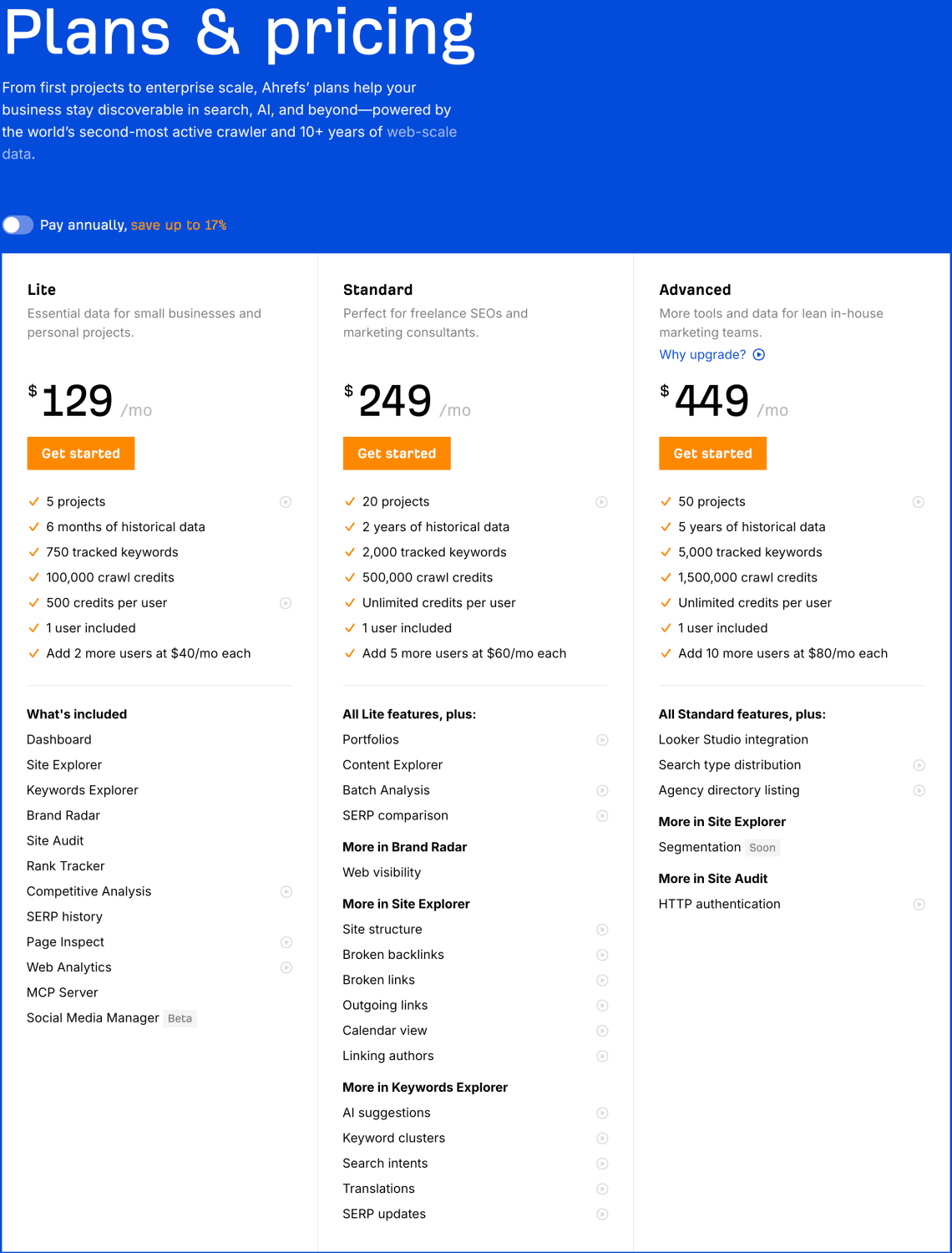
More than a price list, this is a consultation. Ahrefs builds trust by telling you exactly which plan is designed for you.
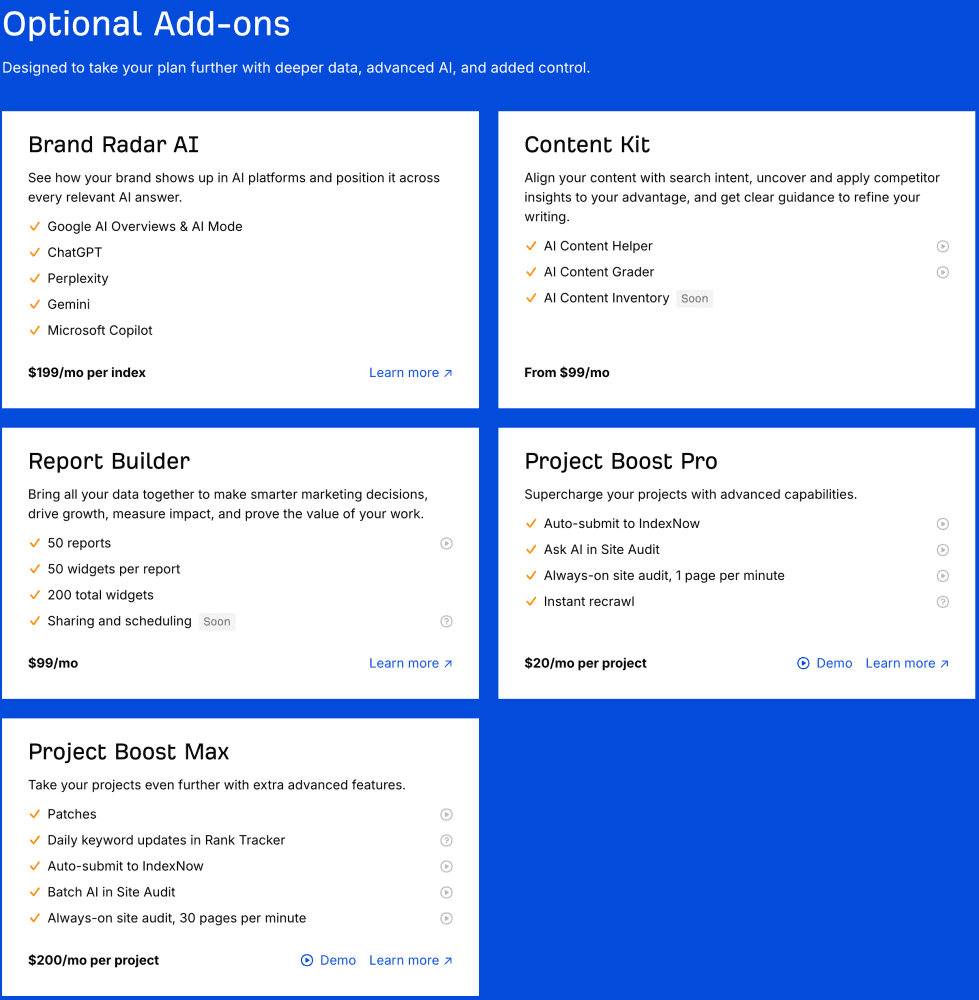
A masterclass in honest pricing. By "unbundling" features, Ahref empowers customers to pay only for the extra power they actually need.
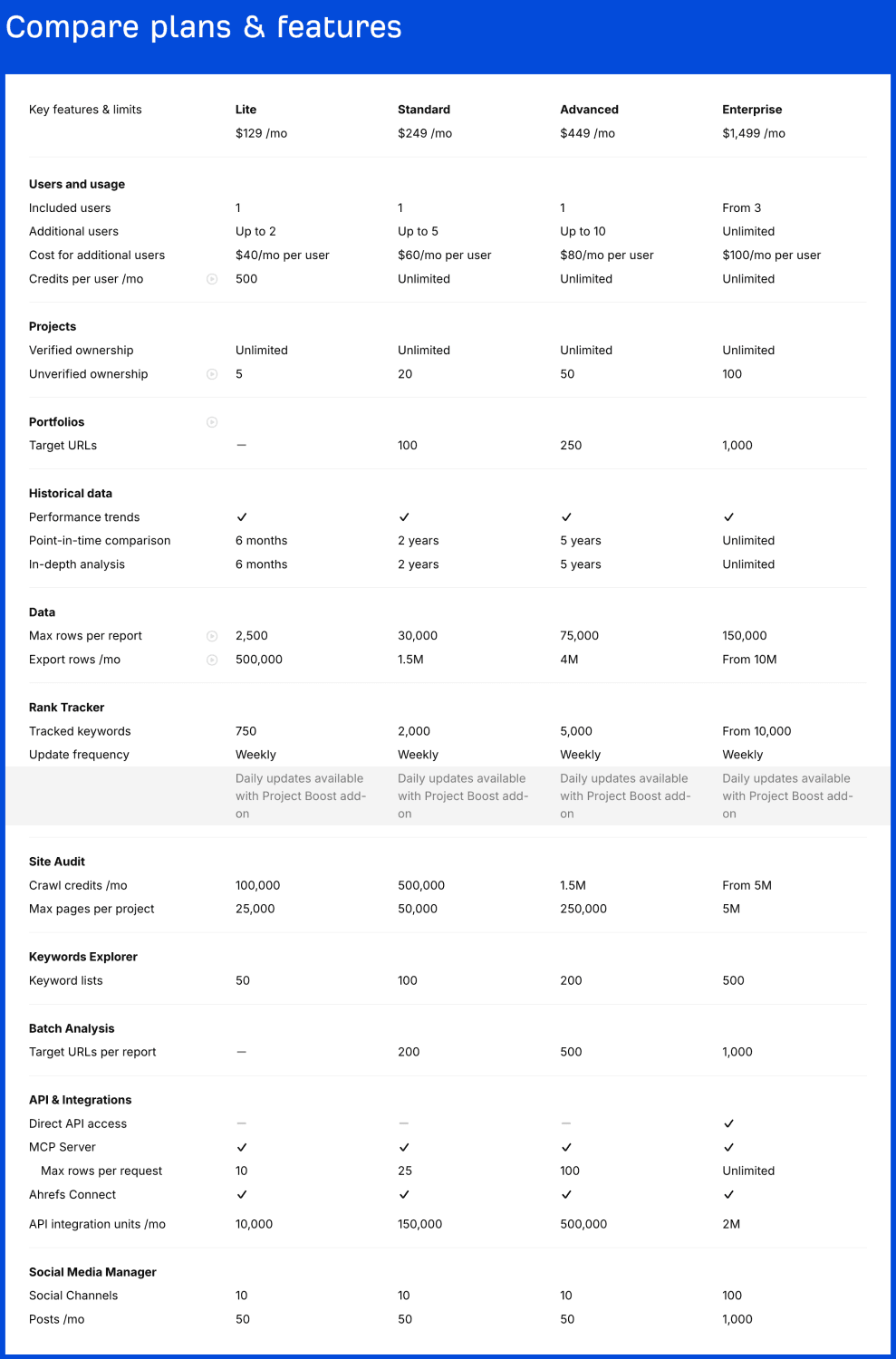
No ambiguity here. Ahrefs respects the analytical buyer by using hard numbers, no vague promises, to show the true value of each plan.
Your Takeaway:
You don't need a complex multi-page layout to start. A simple first move is to add a small FAQ section directly on your pricing page that answers the top three questions your sales team gets about your pricing.
✅ Checklist Point #2: Honest Competitor Comparisons
The Principle:
Creating "vs." pages that are fair and genuinely helpful, even if it means admitting a competitor is better for a specific use case. The goal is to help the buyer make the right choice, not just your choice.
See It in Action:
ClickUp has mastered this with their "vs. Jira" page. They build trust by using honest context like "Plugin required" instead of a simple "no." They then structure the page in a persuasive "three-act" format: the logical feature grid, a wall of awards for authority, and laser-focused testimonials from former Jira users for emotional connection.
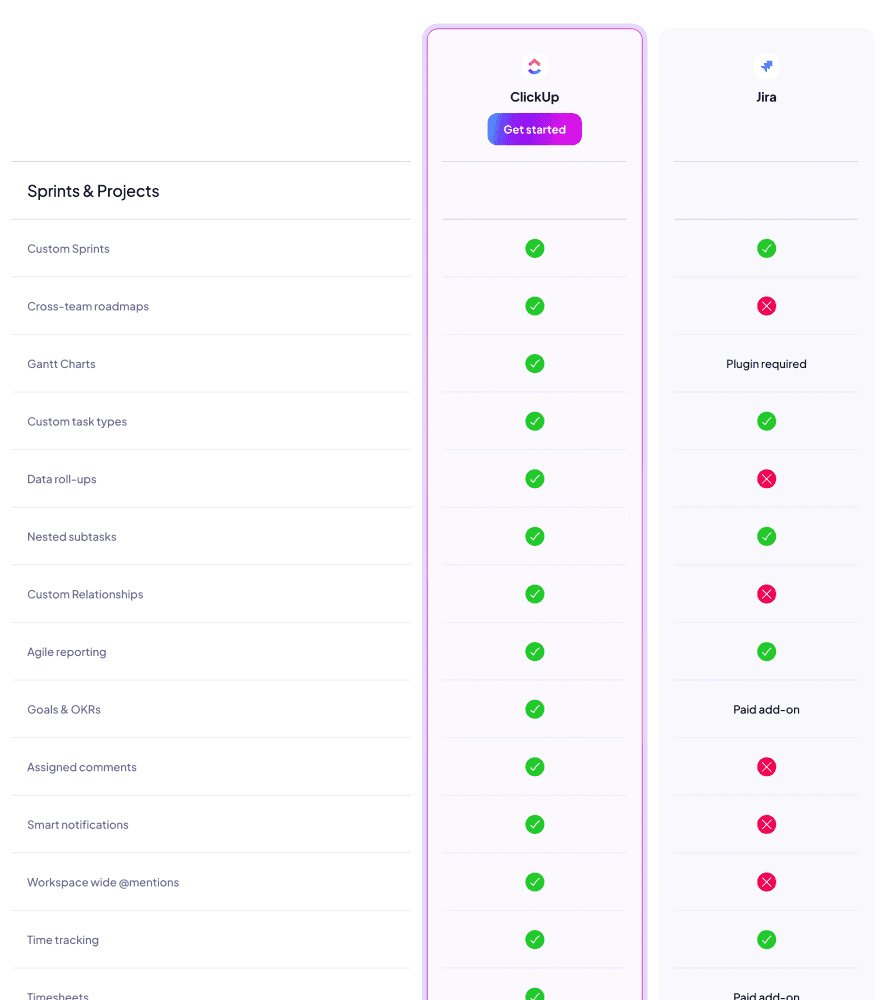
The most persuasive detail here is the honesty. Using phrases like "Plugin required" instead of a simple "No" shows fairness and makes the entire comparison trustworthy.
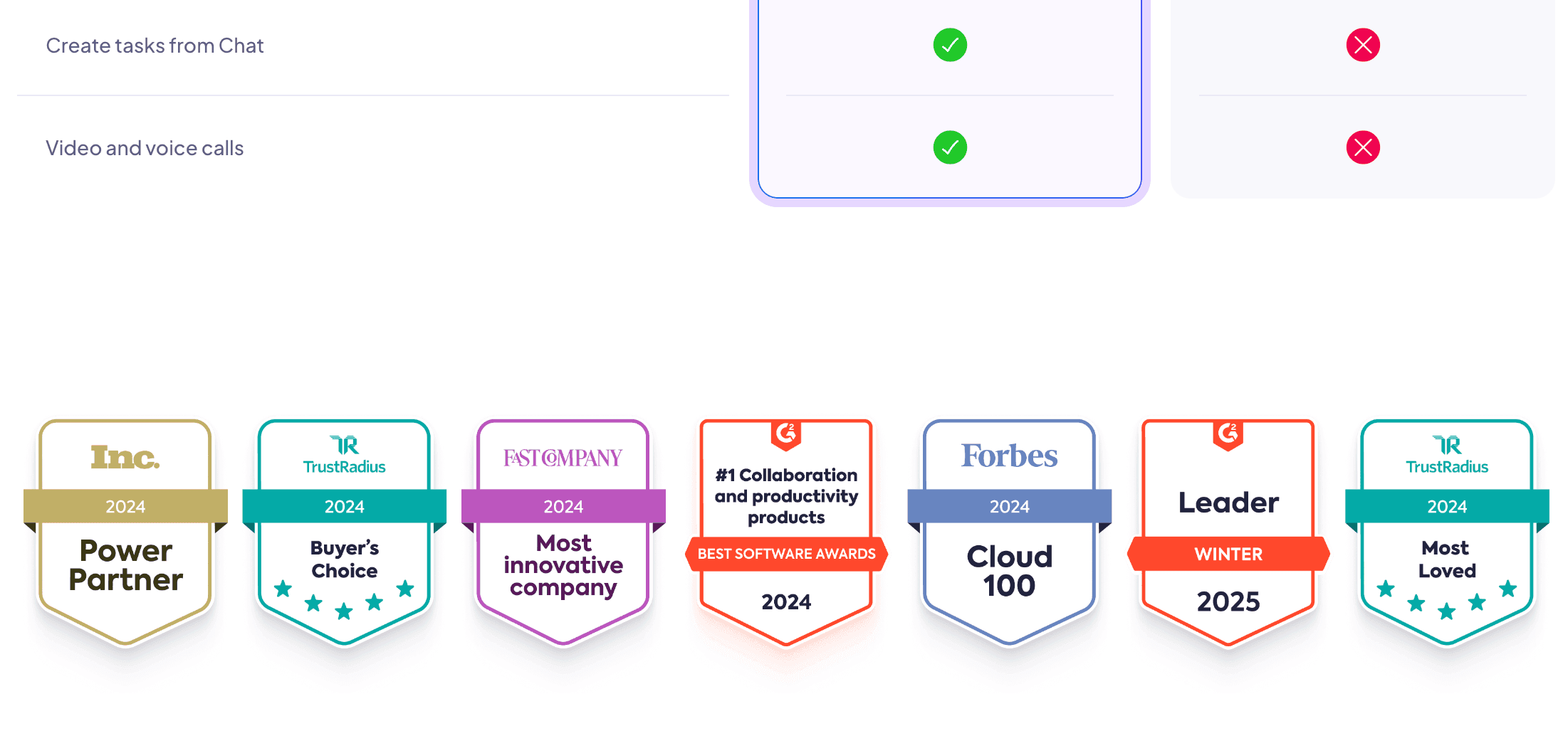
After the logical argument comes the proof. This "wall of authority" uses awards from sources such as Forbes and G2 to provide powerful third-party validation.
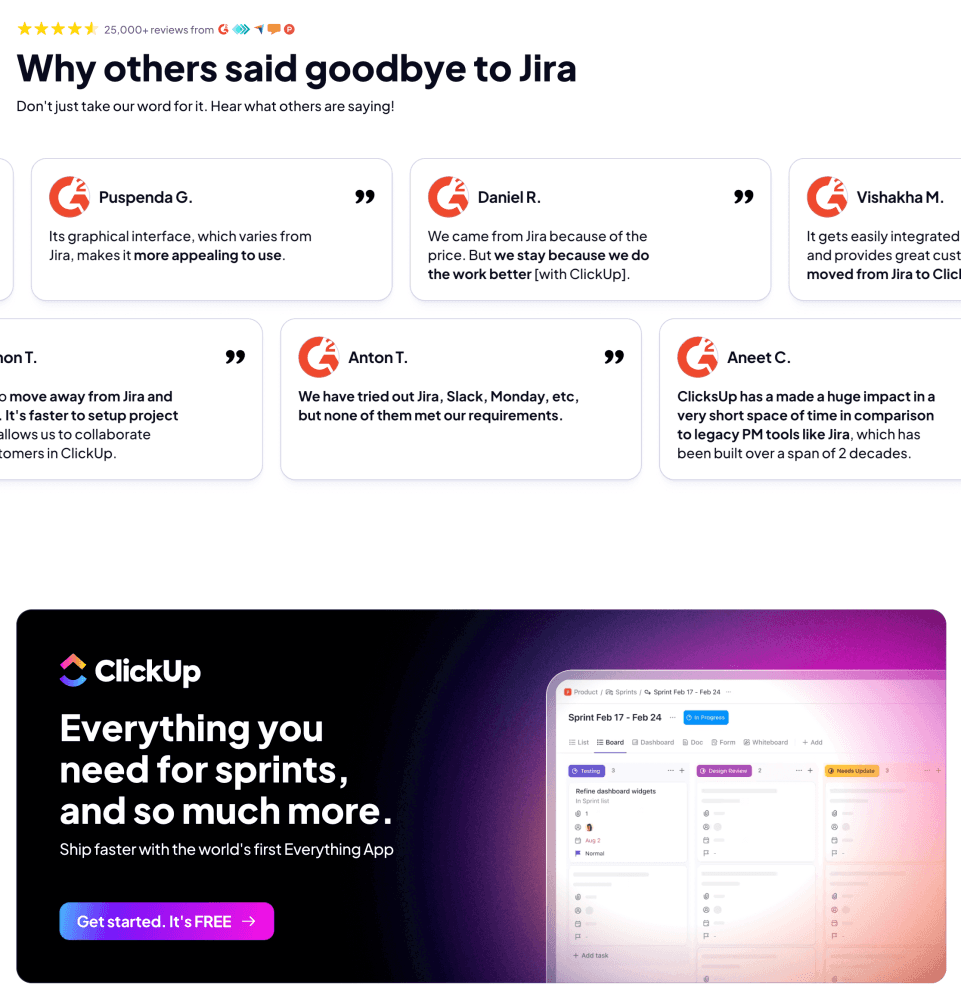
The final, emotional proof. These testimonials are laser-focused, featuring former Jira users who speak directly to the visitor's pain points and validate the decision to switch, followed by a CTA that speaks to their advantage over others.
Your Takeaway:
The key lesson here is to go beyond features and compare philosophies. A truly high-trust comparison will honestly explain who your competitor is perfect for, and who you are perfect for. This elevates the conversation from a sales pitch to a strategic consultation.
✅ Checklist Point #3: Public-Facing Metrics or Roadmaps
The Principle:
This is about sharing the journey with your customers. By opening up your product roadmap or key business metrics, you invite your users behind the curtain, making them feel like valued insiders, not just consumers.
See It in Action:
Buffer is a legendary example of this, and your research shows just how deep it goes. For them, transparency isn't a marketing tactic; it's their core business strategy. With a small marketing budget, they rely on community and word-of-mouth, which is fueled by their public feedback hub. They don't just show what's "In Progress" or "Done"; they show raw, unfiltered user suggestions, including frustrated comments. By refusing to hide criticism, they prove their commitment to listening, which builds immense loyalty. They're so transparent that they even write blog posts about how and why they are transparent.
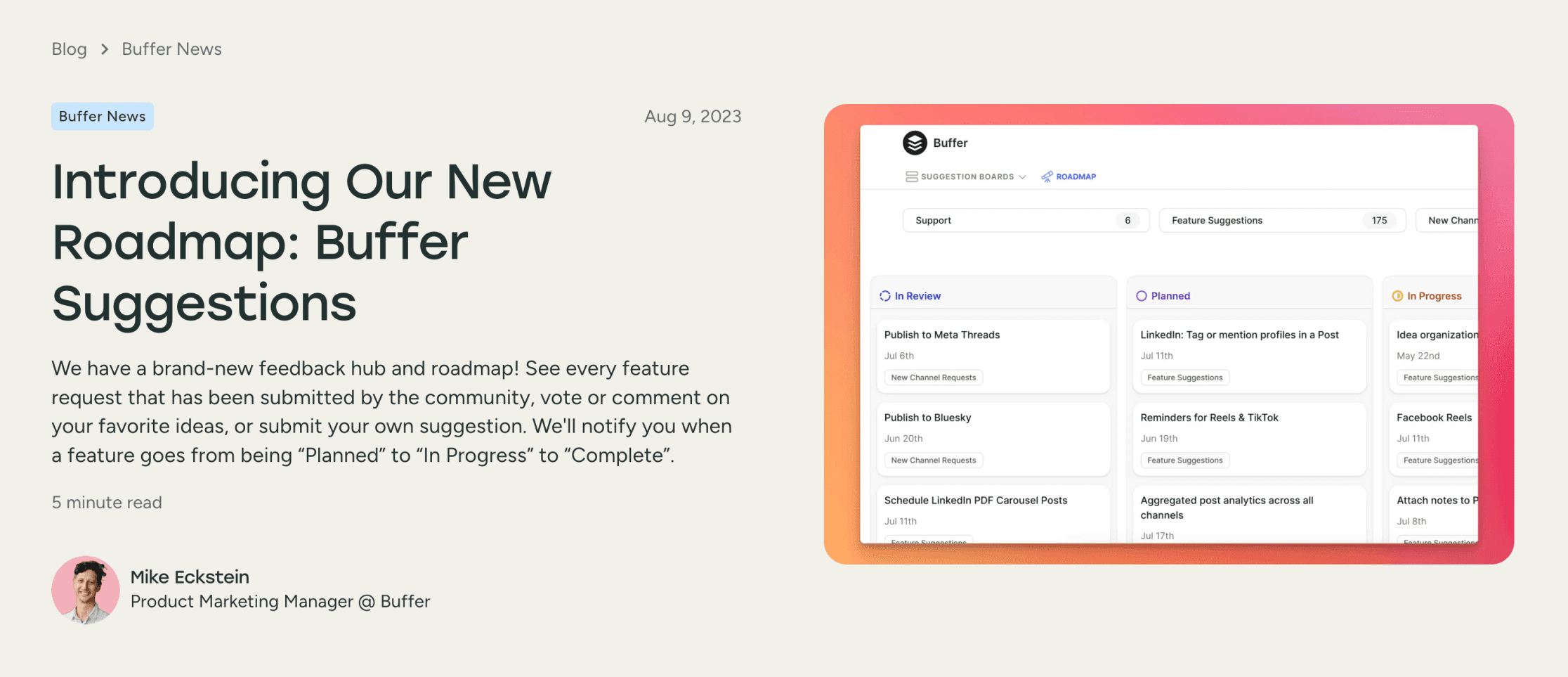
Buffer treats transparency like a product launch. Announcing their new roadmap in a dedicated blog post turns a simple update into a community-focused event.
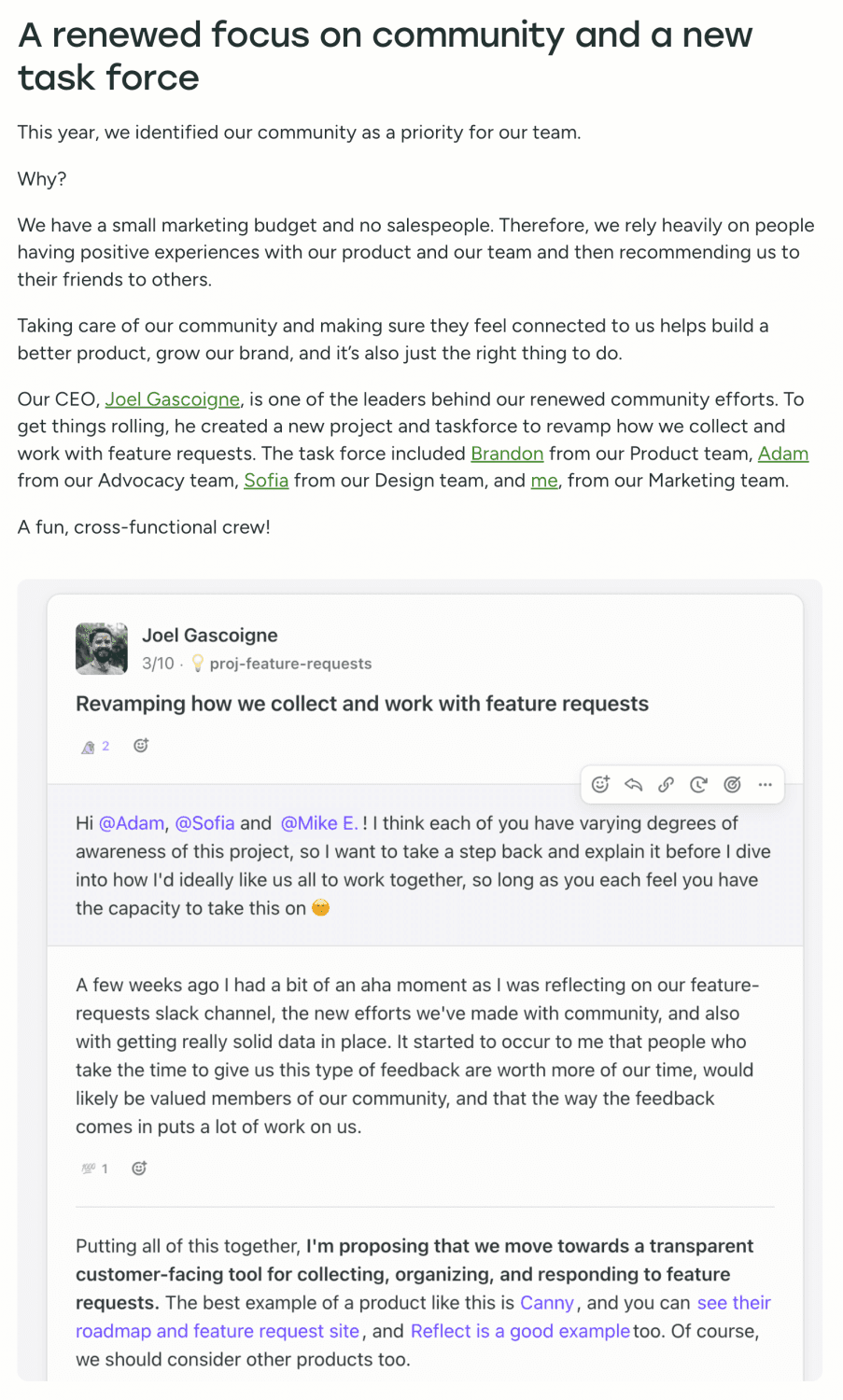
For Buffer, transparency isn't just a feature; it's their business model. This internal post reveals their "why": with no sales team, they rely on community and trust to grow.
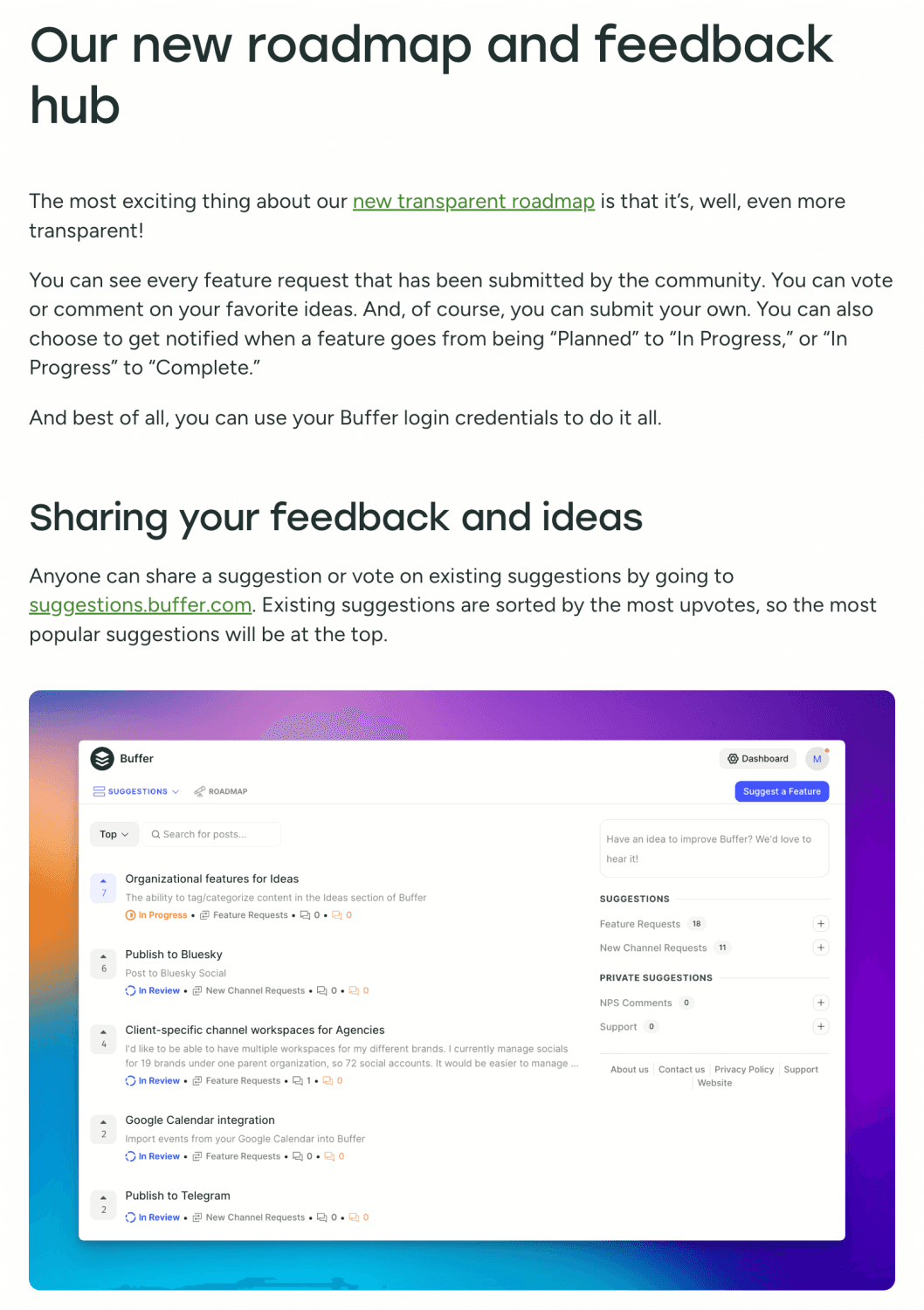
Buffer's feedback hub is more than a list; it's an invitation to co-create. Simple tools for voting and commenting give users a real sense of ownership of the product's future.
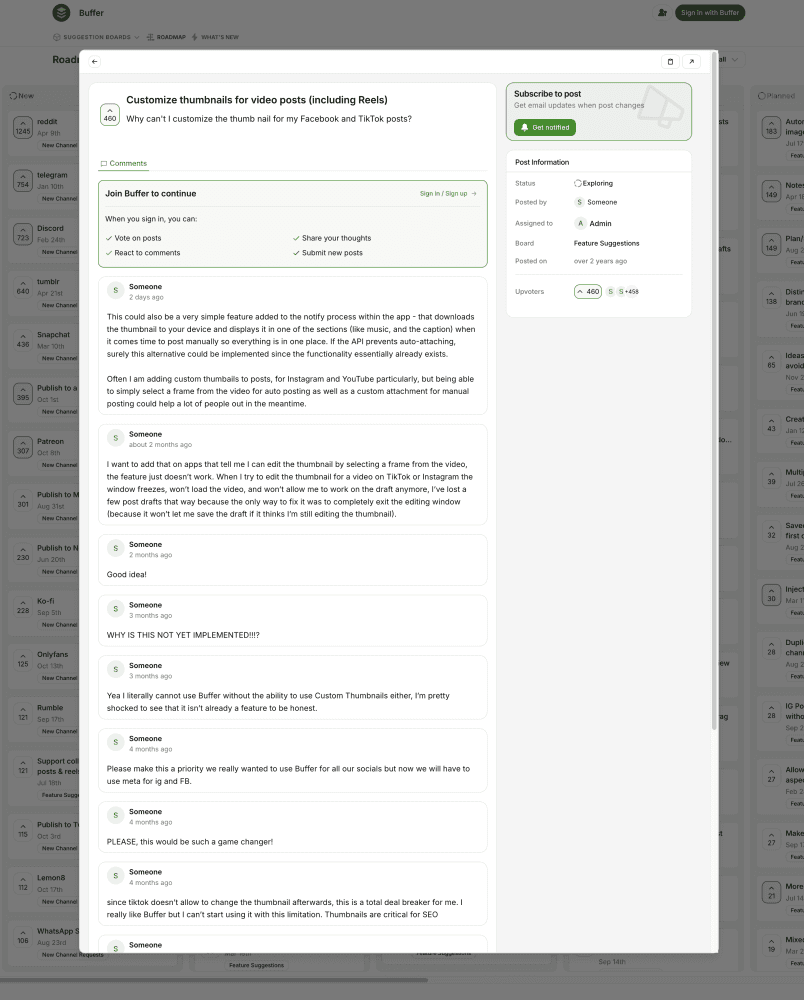
This is what radical transparency looks like. Buffer doesn't delete frustrated comments; they feature them, proving a commitment to listening that builds more trust than a perfect roadmap ever could.
Your Takeaway:
You don't need a custom-built platform to start. Buffer's first transparent roadmap was a simple, public Trello board. The lesson is that the tool doesn't matter as much as the mindset. Start by sharing a simple plan with your most valued customers and genuinely listening to their feedback.
✅ Checklist Point #4: "What We're NOT For" Statements
The Principle:
This is a true power move of self-awareness. It's proactively telling certain customers not to buy your product. This builds immense credibility and acts as a powerful filter, ensuring you attract better-fit customers who are less likely to churn.
See It in Action:
Basecamp has built an empire on this philosophy. Their homepage acts as a manifesto against the chaos and complexity of modern project management. In a direct letter from their co-founder, they state that Basecamp is "designed for smaller, hungrier businesses, not big, sluggish ones." By defining what they are not, they create a powerful identity that their ideal customers are proud to associate with. Their famously simple product design serves as the ultimate proof of this promise, delivering the clarity they preach.
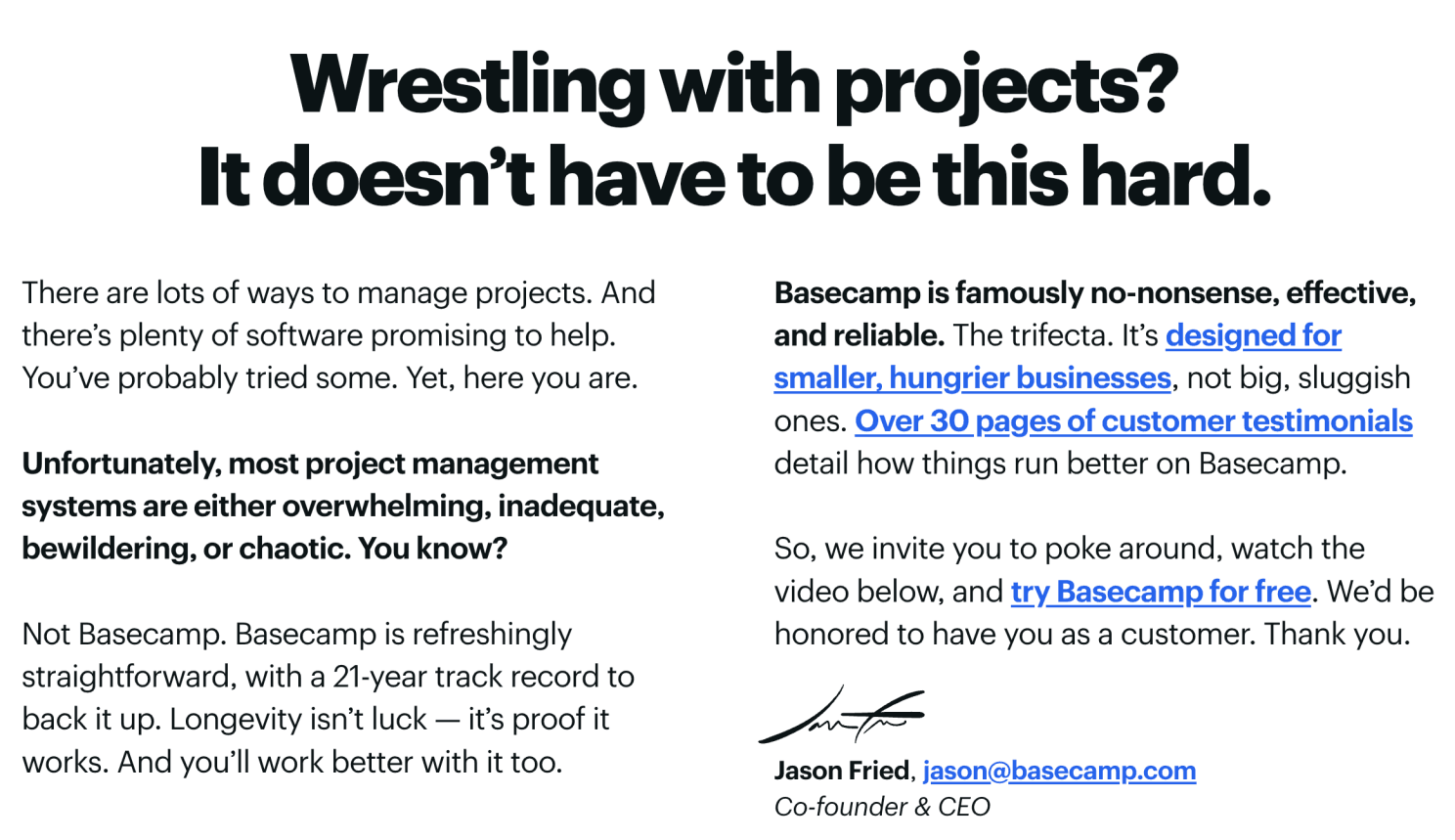
This isn't just marketing copy; it's a manifesto from the founder. The line "designed for smaller, hungrier businesses, not big, sluggish ones" is a powerful act of transparent positioning.
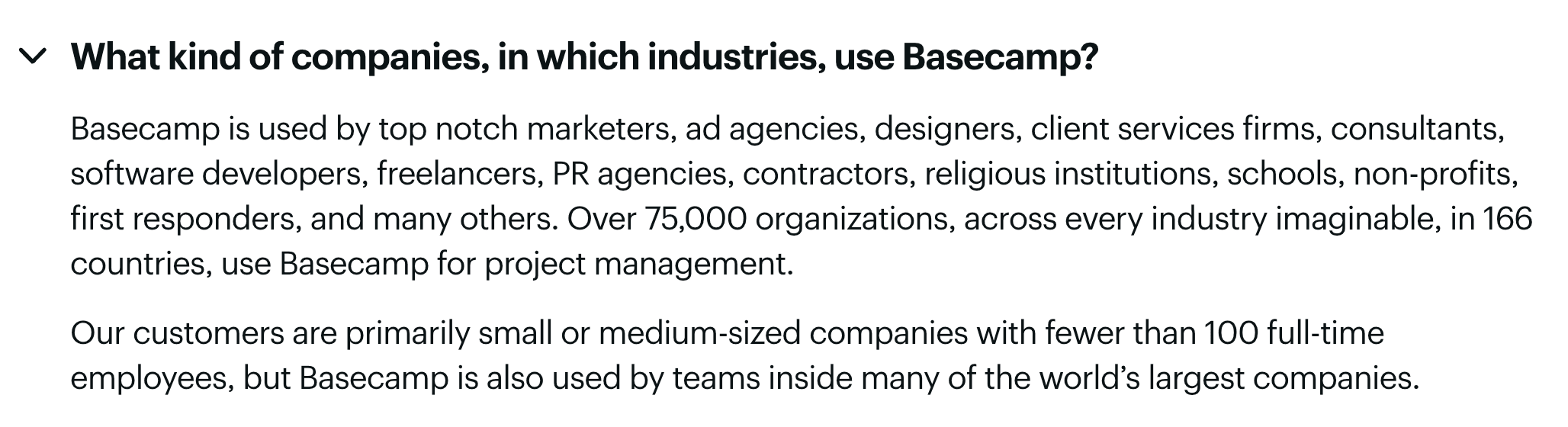
After the bold manifesto, Basecap provides a simple practical definition. Stating their focus on "small or medium-sized companies" manages expectations and respectfully filters for the best-fit customers.
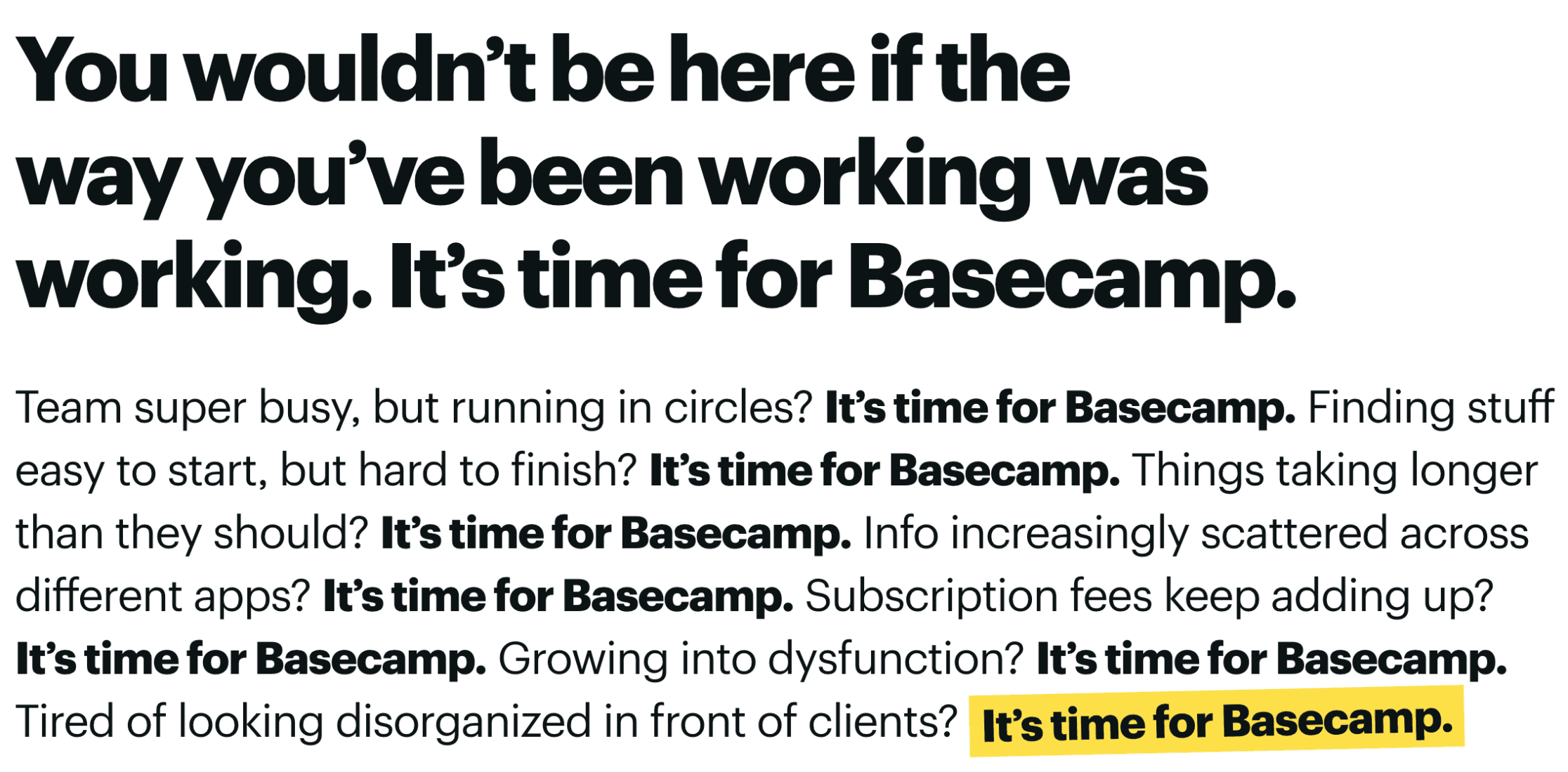
Basecamp perfectly articulates the reader's pain. This bold, empathetic headline makes a potential customers feel deeeply understood before they even see a feature.
Your Takeaway:
Want to find your "anti-ICP" (Ideal Customer Profile)? Get your sales and customer success teams in a room for 30 minutes and ask one question: "What are the top 3 traits of a customer who always churns?" The answer is the beginning of your "What We're Not For" statement.
✅ Checklist Point #5: Clear and Simple Data/Privacy Policies
The Principle:
This is about translating complex legal jargon into plain English that a normal human can understand. Instead of hiding behind a wall of text, transparent companies use design and simple language to make their policies clear, accessible, and honest.
See It in Action:
Slack turns a potential liability into a trust-building asset with their Trust Center. They don't just provide a legal document; they provide a guided experience. They use clear, benefit-oriented headlines like "You own and control the content," and a proactive FAQ to answer the tough questions users are really asking. The most powerful example of their transparency is their honest admission that absolute security can't be guaranteed. This radical candor shows they respect their users' intelligence and are committed to being upfront, which builds immense credibility.
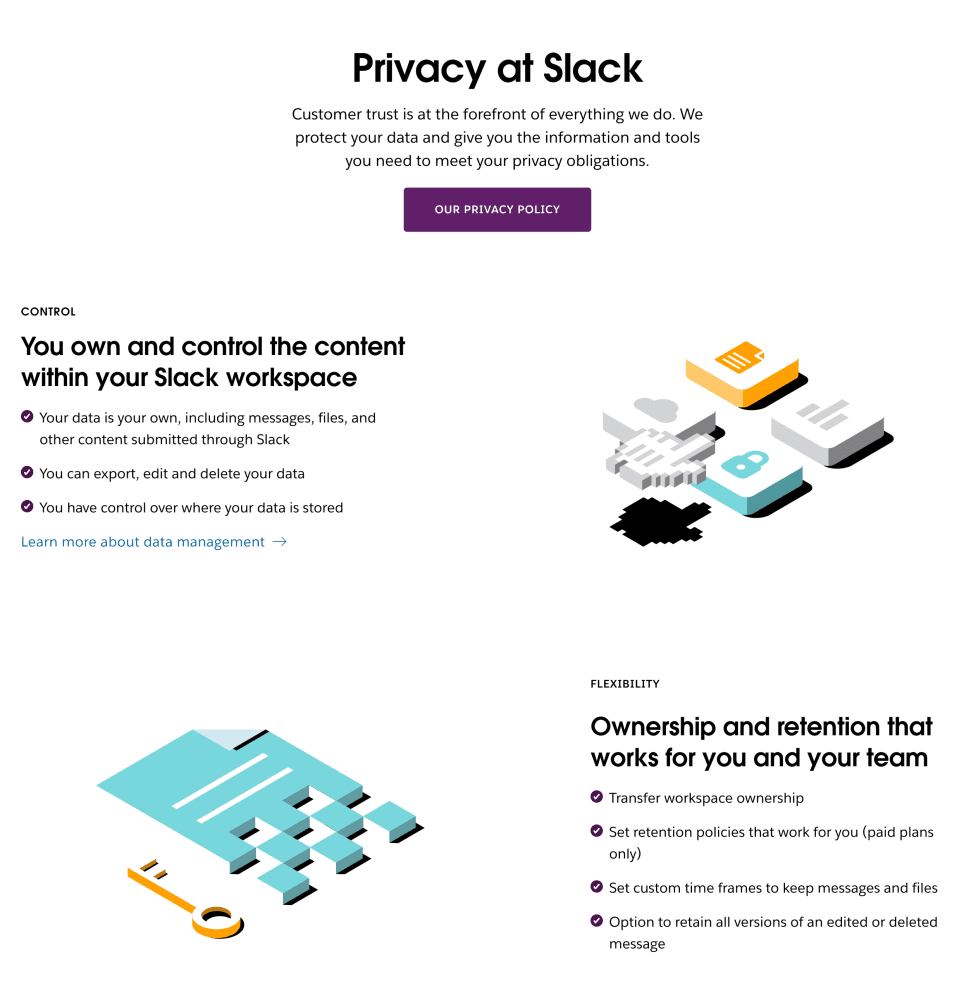
Slack masterfully reframes a dense legal topic as a user benefit. Headlines like "You own and control the content" are simple, powerful promises that build immediate trust.
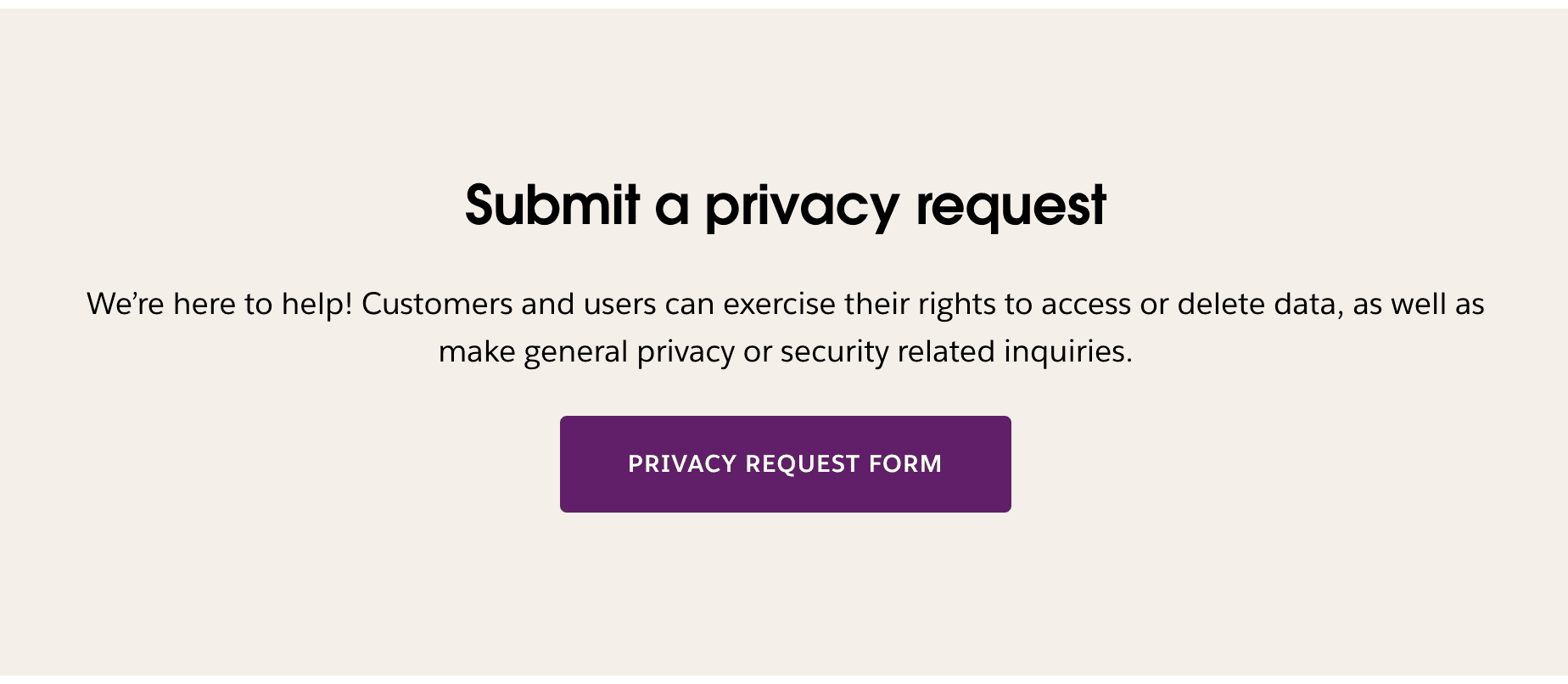
This is what respecting your users looks like. Instead of burying the process in fine print, Slack provides a clear, easy-to-find form, turning a legal obligation into a trust-building feature.
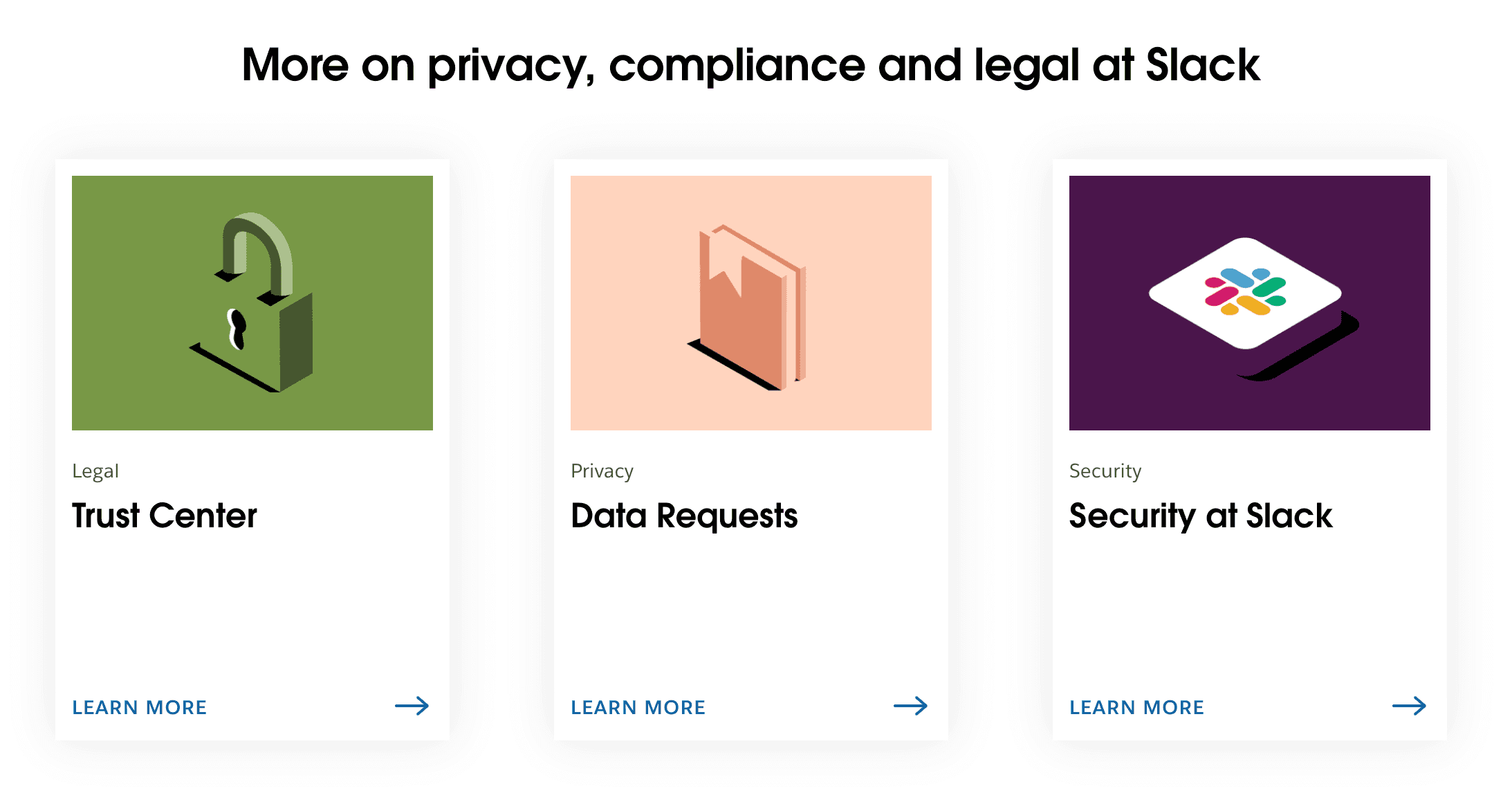
Instead of a single, intimidating document, Slack uses clean, card-based navigation. This user-friendly design breaks a complex topic into manageable pieces and invites users to explore with confidence.
Your Takeaway:
The ultimate benchmark here is what I call the "Grandma Test." Could your grandmother read your privacy policy and understand the basics of what you do with her data? If not, it's too complicated. Find one paragraph on your legal page and try rewriting it in simple, plain English.
The Journey Starts With One Step
Building a high-trust brand doesn't happen overnight. It's the result of countless small, deliberate decisions to be clear, honest, and helpful.
As we've seen from these examples, transparency isn't just a vague philosophy; it's a series of concrete, strategic actions. It's a mindset that shows up in every corner of a business.
Ahrefs teaches us that transparency is about creating clarity with pricing, not just listing a number.
ClickUp shows us how to build a persuasive argument with fair, detailed competitor comparisons.
Buffer proves that transparency can build a community by inviting users to co-create the future of the product.
Basecamp demonstrates the power of self-awareness, building trust by defining who they are not for.
And Slack reveals that transparency is an act of respect, translating complexity into simple, human terms.
Transparency isn't an all-or-nothing game. The journey starts with one step.
Which point on this checklist will you tackle first?